

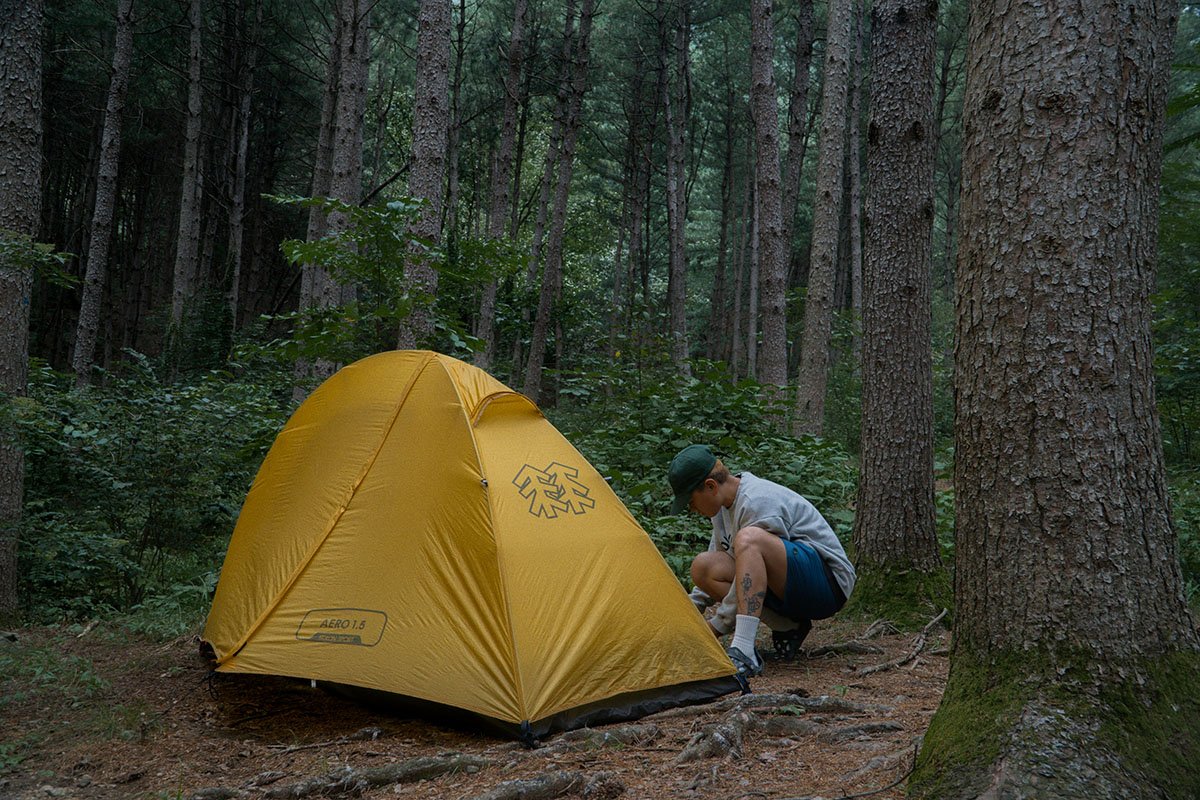
As spring approaches, nature lovers begin to prepare for backpacking experiences. But without the ideal gear, delighting in the outdoors to the fullest can be difficult.
Have you ever set out on a backpacking journey and had the heaviest tent of all time, had condensation soaking your sleeping bag, or prayed to the universe to stop the rain soaking through your camping tent on a cold night on the trail?
Possibly you have actually a specialized camping tent like a hot tent or a camping tents suggested for you and a pet. No matter the circumstance, if your present camping tent does not fulfill your requirements or is revealing indications of wear, it may be time for an upgrade.
The very best overall option for backpacking tents is the REI Half Dome SL 2+. While it might not be the lightest, it’s very light for a tent, is resilient, has an excellent price point, and is the most value.
In addition to the Half Dome SL 2+, our selection includes a range of backpacking camping tents, from light-weight options for solo backpackers to expedition-style tents or those built for convenience. Continue reading to find our picks for the best backpacking tents, and make 2024 your best backpacking year yet.
6 Finest Backpacking Tents
Best General: REI Half Dome SL 2+
 Image by REI The REI Co-op Half Dome SL 2+camping tent has an engaging mix of features, quality, weight, and cost that sets it apart in the backpacking tent market. This tent remains a favorite among camping tents due to its spacious interior, and durability.
Plus, it’s a great worth for the money. The camping tent is generous and uses a long length and generous peak height, so taller
folks will be comfy too. The Half Dome SL 2+masters offering ample interior area, with a floor area of 33.7 square feet, making it larger than many other ultralight tents. The near-vertical mesh side walls even more make it feel additional roomy.
While the tent focuses on interior area and durability over weight, it still manages to weigh just three pounds. Trimming away the footprint lowers the weight.
The camping tent has quality parts, like the DAC aluminum pole system, upgraded stakes, a robust 40-denier floor, and a 30-denier rainfly.
This ultralight backpacking tent has a full-coverage rainfly and a raised bath tub floor. While it carries out well in rain and light wind, its high profile may make it vulnerable to bowing in high winds. Packing additional stakes for guying out the camping tent can help.
With 2 doors and vestibules, the tent supplies a lot of storage area for gear on both sides, unlike numerous backpacking camping tents. It includes big vents and mesh panels for efficient ventilation, lessening condensation on damp nights.
The freestanding design and one-piece hubbed pole system make setting up and removing the camping tent easy, even for beginners.
While it might not be the lightest choice available, its combination of features makes it a top contender.
Specs:
- Seasons: 3-season
- Sleeping Capacity: 2-person
- Minimum Path Weight: 3 pounds. 15 oz.
- Packaged Weight: 4 lbs. 11.5 oz.
- Packed Size: 7 x 20.5 inches
- Floor Dimensions: 90 x 54 inches
- Peak Height: 42 inches
Best for Living Space: Big Agnes Copper Stimulate HV UL2 Tent
 Image by Big Agnes The Big Agnes Copper Spur HV UL2 is an excellent light-weight camping tent for those seeking space and comfort without compromising on weight, with features like 2 big doors and vestibules.
This freestanding camping tent is likewise simple to set up, making it suitable for both brief weekend journeys and longer explorations. The Huge Agnes Copper Spur HV UL2 has large side door vestibules, plus plenty of headroom so
2 individuals can sleep well on the floor space, with room for gear. It’s light-weight for a spacious tent, with the minimal path weight having to do with two pounds. Its peak height is a generous 40 inches. There are ceiling pockets, media pockets, and off-the-floor storage
. It’s large and has great headroom, but possible disadvantages are its rate and the fabric may be a bit vulnerable; they tried to make it more powerful with additional tear strength and leak resistance. They recommend utilizing a matching footprint to extend the life of the camping tent body.
There are dual low-vent vestibule doors and high-fly vent options for both airflow. There are dual-zipper doors, stash pockets, equipment loops, and TopLok buckles which are hassle-free for tying the tent body down and stabilization.
If you focus on light-weight and spaciousness in your backpacking tent, the Big Agnes Copper Stimulate HV UL2 deserves thinking about.
Specs:
- Sleeping Capacity: 2 individuals
- Minimum Path Weight: 2 pounds. 11 oz.
- Packaged Weight: 3 lbs. 2 oz.
- Loaded Size: 6 x 19.5 inches
- Floor Dimensions: 88 x 52/42 (L x W head/foot) inches
- Peak Height: 40 inches
Best for Expeditions: MSR Remote 2
 Image by MSR Being available in as our finest for explorations– and finest ultralight tent– is the MSR Remote 2. It’s a four-season backpacking camping tent that offers dependable protection and convenience, making it a perfect choice for long stays in rugged alpine or remote surfaces– a terrific tent that will work for summer outings however is likewise engineered to withstand harsh storms.
It’s nearly uncomplicated to assemble and disassemble, which is invaluable on explorations or backcountry ski missions.
The roomy interior features make it a great camping tent with a roomy hooped vestibule, with ample storage and cooking space. It’s developed for wet weather and extreme temperatures, with strengthened accessory points and snow flaps.
The MSR Remote 2 offers less headroom compared to other top backpacking tents and the interior doors are a bit small, however setting up and taking down this tent is a breeze thanks to its user-friendly design and secure pole attachments. It carries out well in rainy conditions and will keep you dry and comfy.
The MSR Remote 2 stands out as a long-lasting shelter as its robust building means it will remain. While it might not be the lightest alternative, its efficiency and dependability make it a compelling choice for mountaineering explorations, backcountry ski journeys, and backpacking adventures.
Specifications
- Sleeping Capability: 2 individuals
- Minimum Path Weight: 6 pounds. 11 oz.
- Packaged Weight: 7 pounds. 2 oz.
- Loaded Size: 7 x 20 inches
- Floor Dimensions: 87 x 55 inches
- Peak Height: 44 inches
Best for Ventilation: Sea To Top Alto TR1 Camping Tent
 Image by Sea to Summit The Sea to Summit Alto Tr1 stands out as a superior one-person semi-freestanding double-wall camping tent, with excellent airflow. For the solo hiker concerned about path weight, this is the very best ultralight backpacking camping tent. This is a spacious camping tent that
still handles to be very light, at 2 pounds. Including a single side door and a generously sized vestibule, it offers room for saving gear with simple access. The ventilation is excellent, so you can delight in a cool interior with very little condensation accumulation, even during warm weather condition or damp conditions.
Although a lighter camping tent, its interior volume, and near-vertical walls make a special five-sided inner tent. This setup implies it’s more comfortable to move around than in many backpacking camping tents. You can alter clothing quickly and shop individual items within arm’s reach.
The inner tent’s abundance of mesh promotes exceptional airflow, while a single D-shaped door makes entry and exit swift, with dual zippers for easy access to saved equipment. The five-sided flooring layout offers additional area for internal gear storage and taking full advantage of headroom.
Geared up with a multi-segment pole and a stress ridge cross pole, the Alto Tr1’s structure is steady. The rainfly, has a split vestibule door, for gear storage and keeping ventilation. The included leading vent controls air flow between the inner camping tent and the rainfly, effectively venting warm air to alleviate wetness and condensation.
Nevertheless, the inability to control the vent from within the inner camping tent might be somewhat troublesome.
The camping tent’s leading vent does not have screening, possibly welcoming pests into the area between the inner tent and rainfly. While this may not always be a substantial problem, it calls for factor to consider, specifically during peak insect seasons.
The Sea to Top Alto Tr1 is a large and comfy one-person camping tent, providing ease of setup and impressive livability for solo adventurers seeking a dependable and breathable shelter on the trail.
Specs:
- Sleeping Capacity: 1 person
- Minimum Trail Weight: 2 pounds. 1 oz.
- Packaged Weight:2 pounds. 7.2 oz.
- Loaded Size:4.3 x 17.7 inches
- Floor Measurements: 84.5 x 42/24 (L x W head/foot) inches
- Peak Height: 42.5 inches
Best for Comfort: MSR Hubba 2 Camping tent
 Image by MSR The MSR Hubba is the very best camping tent for backpackers seeking quality, toughness, and comfort. There is
no foot taper so you get extra room across the tent. There are overhead pockets and big vestibules. Its thoughtful design consists of composite poles, a water resistant rainfly, and a raised bath tub flooring, making sure solid performance in damp and windy weather condition. Although on the smaller sized side at 15 sq. ft., the vestibule style effectively prevents water from leaking inside when opened. While the most recent model has less mesh for ventilation, deployable vents on the rainfly assistance maintain air flow without compromising waterproofing.
The Hubba is a terrific backpacking camping tent. Setup is simple, thanks to its freestanding structure and symmetrical design. Its interior area is generous, and accommodating two individuals conveniently with plenty of storage choices.
Despite its thin 20-denier materials, the camping tent proves resilient, with very little signs of wear with time.
Specs
- Seasons: 3-season
- Sleeping Capability: 2 individuals
- Minimum Path Weight: 2 lbs. 14 oz.
- Packaged Weight: 3 lbs. 4 oz.
- Packed Size: 4.5 x 19 inches
- Floor Measurements: 84 x 50 inches
- Peak Height: 40 inches
Best for 1 Person: Six Moon Designs Lunar Solo Tent

Image by Six Moon Designs The lightest three season tent on our list, the 6 Moon Designs Lunar Solo backpacking camping tent is the very best backpacking camping tent for solo adventurers seeking a light-weight, resilient, and storm-worthy shelter.
It offers enough interior space for your equipment inside, plus space for your pet dog. You can pitch simply the camping tent body in a path hut.
With outstanding storm protection, it’s the very best backpacking camping tent for long-distance thru-hikes who want to conserve weight anywhere possible. With its ingenious single-pole assistance style, the Lunar Solo is easy to establish and remove rapidly.
It requires a camping tent pole to establish, which you can extend all the way to develop a really high peak. Many backpacking tents nowadays use this treking pole option to decrease jam-packed weight.
Featuring a 6-inch bath tub flooring and lots of interior and vestibule area, the Lunar Solo likewise safeguards from rain and snow. Made from high-quality silpoly fabric, it’s resilient to tears.
It has a silicone-coated polyester floor and canopy to withstand sharp objects and inclement weather condition. The innovative drifting bath tub flooring decreases tension on the camping tent body and minimizes punctures. While not the most resilient to wind, the adjustable stress cables assist in windy conditions.
Its big side entry and extra-large screen make it simple to get in and out. The camping tent’s optimized peak height of 49 inches makes it comfy for taller hikers.
While it could have larger internal pockets, to conserve a few extra ounces, this is the ideal tent to add to your outside equipment.
Overall, the Six Moon Styles Lunar Solo stick out as a leading option for solo backpackers and bike-packers seeking a lightweight, durable, and spacious shelter for their journeys.
Specs:
- Seasons: 3-season
- Sleeping Capability: 1+ individuals
- Minimum Trail Weight: 1 lbs. 9 oz.
- Packed Size: 11 X 4.5 inches
- Flooring Measurements: 90 x 48 inches
- Peak Height: 49 inches
Buyer’s Guide: What to Consider When Buying a Backpacking Camping Tent
Double-Wall Versus Single-Wall
Camping tents with 2 walls have an inner tent with mesh for ventilation and an outer rainfly for weather condition defense. They normally offer much better ventilation and minimized condensation. Nevertheless, they may be heavier due to the extra layers.
Single-wall tents integrate the inner camping tent and rainfly into one piece, which minimizes weight and streamlines setup. They are more compact and light, making them perfect for ultralight backpacking, however they might be less breathable and vulnerable to condensation accumulation.
If you focus on weight savings and simpleness, a single-wall tent might be the method to go. If you value better weather condition defense and ventilation, a double-wall camping tent might be better.
Resilience
Camping tent poles ought to be made from tough materials like aluminum or fiberglass, with premium shock cables to preserve tension. Look for poles with thicker sizes, and consider centers or interconnected sectors for more stability in windy conditions.
Go with durable stakes made from materials like aluminum or titanium, which offer better strength-to-weight ratios than plastic stakes. Think about the style of the stakes, such as Y-shaped or V-shaped, for enhanced holding power in various kinds of terrain.
Search for camping tents with double-stitched joints and sealed joints to prevent water infiltration. Enhanced tension points, such as corners and guy-out loops, add durability to the camping tent by reducing wear and tear gradually.
Greater denier fabrics are thicker and are more durable versus abrasion and leaks. Ripstop fabrics avoid tears from dispersing.
Area to Weight Ratio
Consider every ounce you’ll be carrying on your back. Look for tents made with light-weight materials like Silnylon or Dyneema, and think about compromising a little bit of area for a substantial weight reduction.
Try to find tents with sufficient space but minimal weight and a little jam-packed size so it doesn’t use up your entire knapsack.
Set-Up
Reduce of setup can make a substantial difference at the end of a long day on the trail.
Look for camping tents with color-coded poles, clips instead of sleeves for connecting the camping tent body to the poles, and basic, freestanding designs that don’t require exact staking, like non-freestanding camping tents which may be restricted in where they can be pitched.
Nevertheless, non-freestanding tents are typically lighter and more compact, making them preferred for ultralight backpacking where every ounce counts.
Weather condition Defense
Weather defense suggests more than just having a rainfly. Inspect the hydrostatic head rating (waterproofness) of the tent’s material and joints, and look for features like bath tub floors and strengthened guy-out points for included defense against wind and rain.
Storage
Size isn’t practically how many individuals the camping tent can fit; it’s likewise about the interior space for equipment storage and comfort. Think about whether you need extra vestibule area for your knapsacks and boots, or if you want to go for a snugger fit to reduce weight.
Often Asked Questions
What kind of camping tent is best for backpacking?
Numerous backpackers prefer lightweight and compact camping tents. Usually, freestanding or semi-freestanding camping tents with double-wall building and construction are popular choices for their adaptability and comfort. They are easier to use throughout seasons, where you may not want a tent fly, and are very quick to establish.
A footprint acts as a protective layer in between the tent flooring and the ground, offering extra sturdiness and waterproofing.
If you’re preparing to backpack in rocky surface or locations with sharp items like branches or thorns, a footprint can supply crucial security versus punctures and abrasions, possibly conserving your tent floor from damage.
In damp or rainy conditions, a footprint includes an extra layer of waterproofing, preventing wetness from permeating through the camping tent flooring and keeping you dry and comfy throughout the night.
On the other hand, if you’re starting an ultralight backpacking journey where every ounce matters, skipping the footprint can help in reducing pack weight without compromising much in terms of sturdiness or waterproofing, specifically if you’re camping on softer ground like lawn or sand.
What is packaged weight vs. minimum trail weight?
Packaged weight includes all components of the item, like things sacks and stakes, while minimum path weight refers just to the important components needed for setup, such as the tent body, poles, and rainfly.
What is the ideal weight for a backpacking camping tent?
Generally speaking, a camping tent should weigh roughly 2.5 pounds per individual. You might wish to use a heavier camping tent in specific situations. Much heavier tents frequently come at a lower rate point compared to ultralight designs. If budget plan is a concern factor to consider, you can prioritize price over weight savings.
If you’re setting up camp in one area for an extended duration, such as throughout a multi-day outdoor camping journey or expedition, the weight of the camping tent becomes less of an issue considering that you will not be bring it every day on your back.
In environments with severe weather, a much heavier camping tent will be more robust versus the weather.
How much should a 1-person or 2-person backpacking tent weigh?
A 1-person backpacking camping tent normally weighs between 2 to 4 pounds, with ultralight choices frequently weighing under 2 pounds.
An excellent weight for a 2-person backpacking camping tent is generally in between 3 to six pounds. Ultralight choices may weigh closer to 3 pounds or perhaps less, while more durable or feature-rich designs may weigh closer to 6 pounds.
Is 4 pounds, 5 lbs, or 6 lbs too heavy for a backpacking camping tent?
Four pounds may be considered heavy for a backpacking camping tent, especially for those going for ultralight or light-weight setups. For much shorter trips or less physically demanding surface, a four-pound camping tent might be fine if it offers other desirable features like spaciousness, durability, or much better weather resistance.
Nevertheless, if you’re preparing long-distance hikes or aiming to minimize pack weight, you may want to check out lighter camping tent options to decrease the overall problem on your back.
The Very Best Backpacking Camping Tents
Choosing the best backpacking tent can be tough when there are numerous options out there, however finding the right tent for your journey is easy when you know what you’re looking for.
Looking at how big of a home each tent has, how easy it is to establish, and whether it’s better versus severe weather and high heavy (or light) it is, can assist you choose.
You likewise wish to make sure that you can sustain bring your camping tent on your back for fars away if you are going to be backpacking for extended durations, so always check the weight.
Our leading choice for the very best all-around backpacking tent is the REI Half Dome SL 2+. This backpacking camping tent is a workhorse that comes at an excellent rate.
It might not have all the fancy functions of some of the higher-end tents, however it has whatever you require, is resilient, and more roomy than lots of other light-weight camping tents, and will be your trusted shelter for the long haul.
However no matter whether you’re just remote camping or costs months on the trail, you can’t fail with among our choices for the very best backpacking tents.
When it comes to backpacking, you require to ensure your camping tent and gear isn’t too heavy. Here are the very best backpacking camping tents of 2024.