

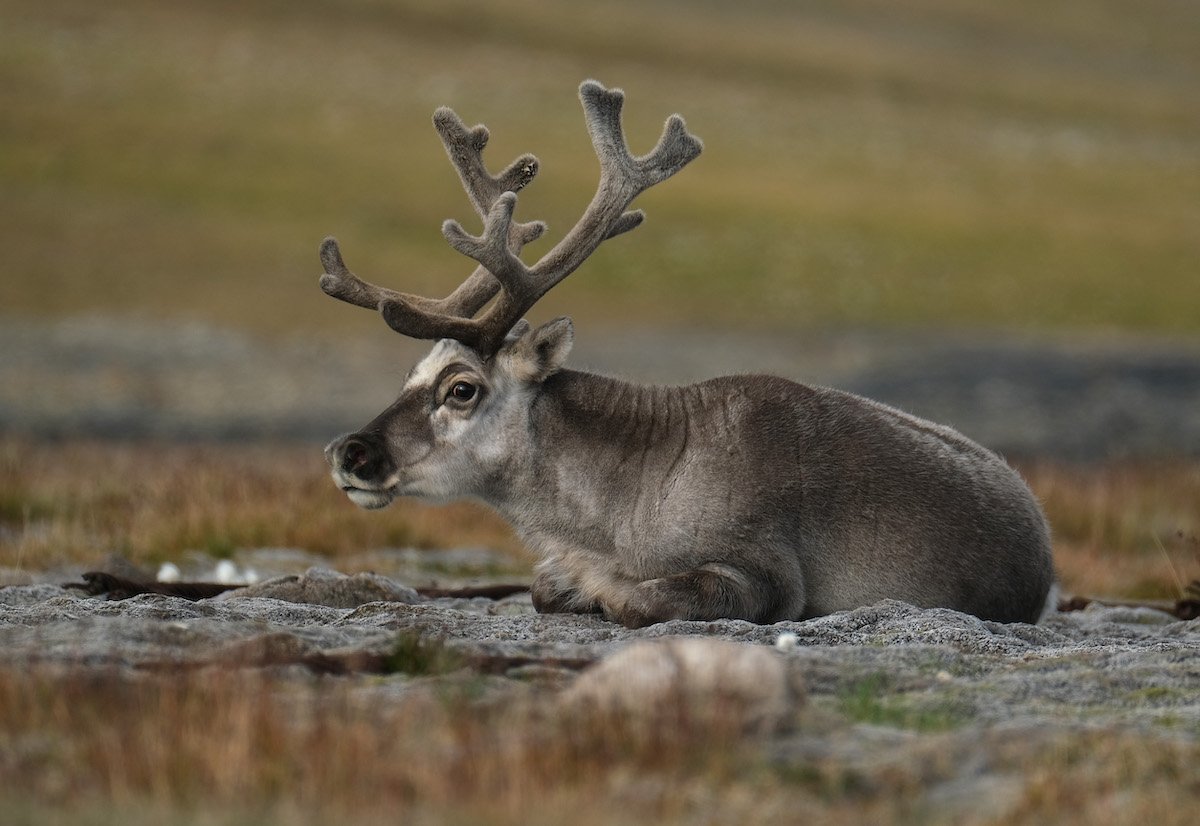
Call them reindeer or call them caribou(it largely depends where you live), Rangifer tarandus are members of the deer household, and they are best understood in some cultures for pulling Santa’s sleigh on Christmas Eve. There are seven subspecies of reindeer/caribou, and they’re native to some of the coldest and northern most locations of the world, including Asia, Europe, Greenland, and North America.
While you surely understand the story of Santa Claus and his reindeer sleigh group, there’s a lot more to reindeer than you may think. Here are five realities you most likely didn’t know about Santa’s hoofed helpers.
5. Reindeer Love Fungi
 Image by Nicolas Lafargue If you’re an herbivore, finding food up in the Arctic and sub-Arctic areas of the earth isn’t the simplest thing on the planet, especially throughout the winter season. Reindeer manage in part by consuming fungi. In warmer months, they consume mushrooms(the flowering part of a fungus), in addition to leaves and blooming tundra plants.
Come fall, reindeer consume what they can find, from mushrooms to little shrubs and sedges, and they start adding in reindeer moss. Once winter hits, reindeer moss ends up being invaluable as one of the couple of food sources for herbivores that can survive the Arctic tundra.
Reindeer moss isn’t a moss, though, it’s a lichen. Lichens are part algae and part fungi– a sort of “fungi-algae sandwich.” Not all animals can absorb lichens, but reindeer certainly can. They can smell the lichen beneath the snow and kick or dig it up utilizing their hooves and antlers.
4. Their Hooves Are Hella Helpful
 Image by Jeff J. Mitchell through Getty Images A reindeer’s hooves can be found in really handy. First of all, they’re big, which helps disperse the animals’weight when they’re walking on snow– similar to snowshoes. In fact, reindeer have the largest and roundest hooves of any deer.
Reindeer hooves are likewise concave, like scoops, which helps them dig for lichen in the snow. The scoop shape also gives these animals an increase when swimming across rivers, which they do during their yearly migration.
3. They’re Travelers
 Image by Margaret Strickland Reindeer travel cross countries– and, no, we’re not talking about the flight from the North Pole to every house on the planet on Christmas Eve. We’re speaking about how reindeer herds migrate hundreds of miles on foot to discover food as the seasons shift.
The National Park Service reports that reindeer complete one of the longest, if not the longest, annual land migration by a mammal, with distances topping 745 miles (1,200 km).
2. Reindeer Have Baby Blues (in the Winter)
 Image by Hans-Jurgen Mager Researchers found that reindeers’ eyes alter from a golden hue to a blue shade in action with the modification in Arctic seasons. Everything pertains to the accessibility of light. In the Arctic winter season, when there is almost continuous darkness, a reindeer’s eyes show blue-light wavelengths, basically reflecting less light out of the eye. This offers the animal a much better possibility of foraging and spotting predators in low-light conditions.
In the short Arctic summertime, when there is nearly continuous daytime, a reindeer’s eyes alter to show a lot more light. The change provides their eyes a golden appearance and enhances their vision for brilliant conditions.
Reindeer can also see ultraviolet light, which assists them endure in an environment with such extreme modifications in light levels and intensity.
1. Rudolph Is More Than Likely a Woman

Image by Nicolas Lafargue This may blow your mind, but Rudolph the red-nosed reindeer is most likely a girl, together with the rest of Santa’s sleigh group. Both male and female reindeer grow antlers (in other deer types, simply the bulls do). However, if you’re looking at a reindeer that has antlers on Christmas Eve, it’s most likely a female than a male, because the majority of bulls drop their antlers in the fall. Apologies to your childhood.
There’s a lot more to reindeer than you might think. Here are five truths you most likely didn’t know about Santa’s hoofed helpers.