

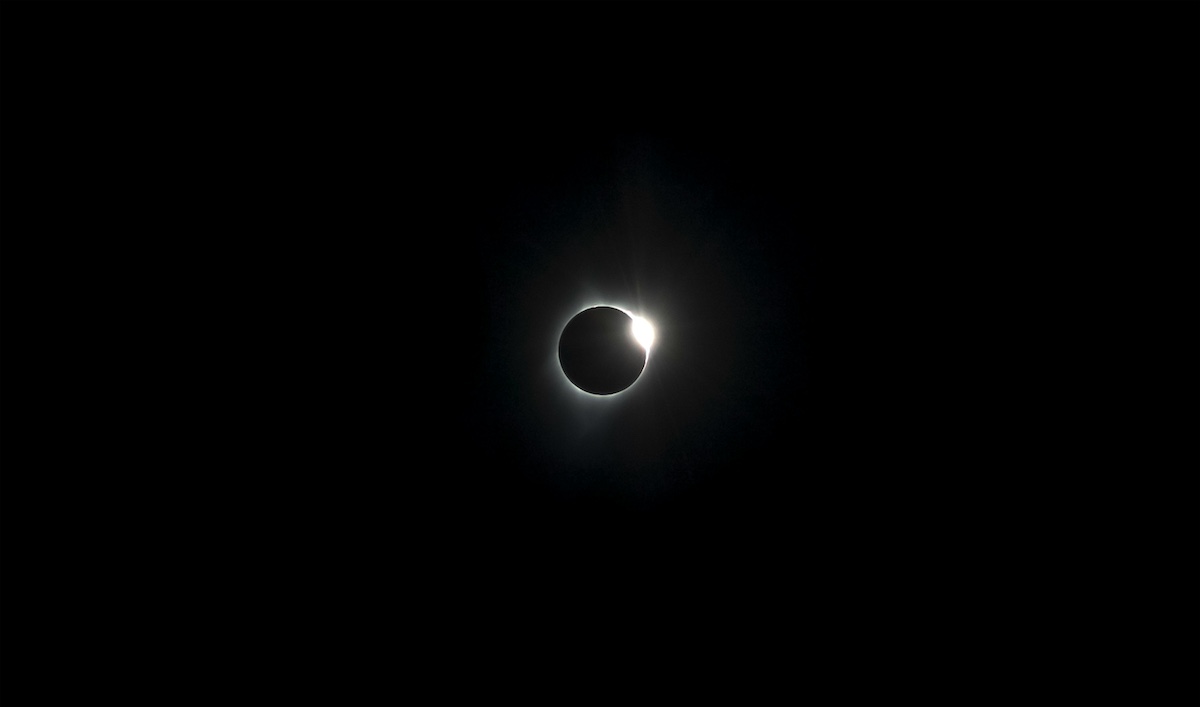
Today is the 2024 total solar eclipse throughout North America. Countless humans on the continent will be acting a little strange, going outdoors and looking at the sun through unique glasses or audiences. Non-human animals may act a little unusual, too. In truth, for animals living within the course of totality, it’s most likely they’ll be confused, anxious, or simply acting a little off. Here’s a glance at animal behavior throughout a total solar eclipse.
 People doing weird things during a solar eclipse. Image thanks to the NPS by means of NASA While people understand that a total solar eclipse happens when the moon passes in between the earth and the sun, blocking the majority of the sun’s light momentarily, non-human animals understand no such thing. For types that don’t use clocks and watches, day and night (as specified by the presence or absence of sunshine) govern their habits as part of their body clock.
“Body clocks are the physical, psychological, and behavioral modifications an organism experiences over a 24-hour cycle,” according to the NIH (National Institutes of Health). “Light and dark have the most significant impact on body clocks.”
So, what occurs when it seems night for a number of minutes in the middle of the day, like what’s taking place today in Texas throughout the 2024 total solar eclipse? Short response: numerous animals will believe it is, in truth, nighttime.
When Day Becomes Night, Go to Bed?
A 1932 term paper detailing animal observations during an overall solar eclipse noted habits from types like crickets, owls, and bees. These types began going about their nighttime organization, regardless of it not in fact being night.
“Individuals reported observations that consisted of crickets chirping, owls hooting and bees going back to their hives as the eclipse went on,” composes the USWS (U.S. Fish & Wildlife Service).
More current eclipse occasions have revealed the exact same. For example, throughout a solar eclipse in India in 1995, night herons abandoned their daylight roosts, and in Kansas in 1994, there were reports of diurnal birds like excellent egrets, livestock egrets, snowy egrets, and little blue herons starting their night routines throughout a solar eclipse.

Source: California State Parks 75% Exhibition a Behavioral Action to an Overall Solar Eclipse
A term paper from 2020 recommends 3 in four types might display a behavioral action throughout a total solar eclipse. In this research study, researchers had a look at 17 types during a total solar eclipse at the Riverbanks Zoo in Columbia, South Carolina. Since the animals were in human care, scientists had a good standard understanding of how the animals acted throughout a normal 24-hour cycle.
Like previous accounts and research studies, researchers observed animals moving to nighttime habits throughout the eclipse. Some also seemed distressed, based on their observed behaviors. Interestingly, reptiles ended up being more active.
“Approximately 75% of observed species showed a behavioral reaction to the eclipse, with most of these animals participating in their established night or nighttime behaviors,” the research study states. “The next most frequent reaction was apparent stress and anxiety.”
In reality, 13 of 17 observed species were acting off in this study. 8 of the species began their nighttime routines when the sky went dark, while 5 types (baboons, gorillas, giraffes, flamingoes, and lorikeets) displayed distressed behaviors.
Can you blame them, considering the day ended up being night and then the night ended up being day again, all within a matter of minutes? For North American animals in the 2024 solar eclipse’s path of totality, today’s ready to get actually weird.
Have you observed any noteworthy animal behavior throughout a solar eclipse?
During today’s total solar eclipse, animals may ends up being confused or anxious. Here’s a take a look at animal habits throughout a solar eclipse.