

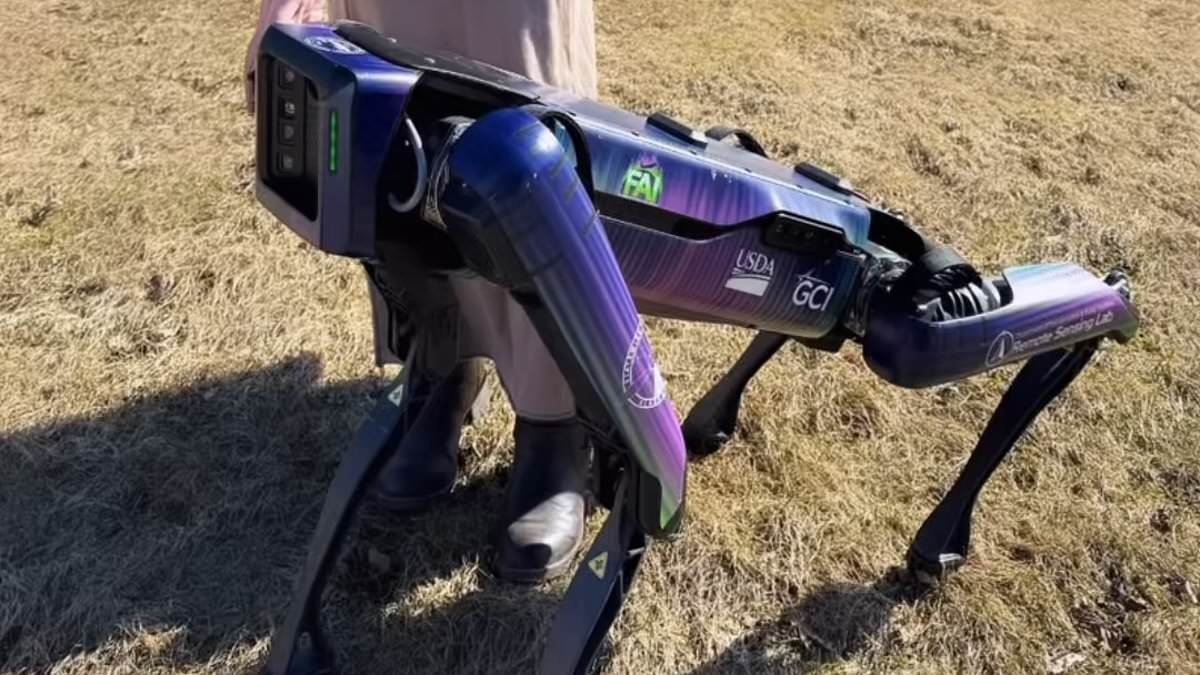
< img src =" https://savageventures.b-cdn.net/wp-content/uploads/2024/04/aurora-robot-dog-cover.jpg?w=1200" alt ="" > Alaska’s Department of Transport introduced a robotic dog as its most recent tool to eliminate wildlife from landing strips and runways at the Fairbanks International Airport.
While you have probably seen images and videos of the Boston Dynamic robotic in the past, state officials state this is the very first time it’s being released for wildlife mitigation, such as frightening birds and other critters.
During a discussion last month, Ryan Marlow, a program coordinator with Alaska’s DOT, called their robot “Aurora” a “wildlife decrease tool.” He discussed that it’s a first presentation use of the innovation, implying state and federal authorities will utilize it to see how it compares to standard methods.
Before Aurora, airport workers would need to clear a runway by keeping the premises and physically patrolling the area– the disadvantage of which is the expense of labor. With Aurora, however, officials prepare to dress it up like a coyote and equip it with flashing lights and possibly one day an air cannon. The advantage of which is Aurora is a multiple-use tool.
” The sole function of this is to function as a predator and permit us to invoke that action to wildlife without needing to use other mitigation means,” Marlow stated, including that Aurora can be controlled with a tablet from a distance.
The $70,000 robotic is currently being used by a range of public and private industries for things like search and rescue objectives, checking devices in dangerous environments, and logistic operations, according to Boston Characteristics’ website.
In addition, the business described the innovation that powers the robotic as a form of expert system, which they call “athletic intelligence” due to the fact that the gadget discovers how to browse and stabilize on numerous surface all by itself.
Throughout the presentation, Marlow described that Aurora was bought through a Federal Research Grant and the job will offer information to both the Federal Air Travel Administration and the U.S. Department of Agriculture for future wildlife operations.
Despite the fact that Aurora has the possible to operate autonomously, Marlow said that they do not plan on letting it up until officials have a chance to map out security criteria. For the time being, Marlow said authorities will be training with Aurora, showing it off in class, and utilizing it for outreach to promote airport safety.
ASSOCIATED POSTS
Alaska officials introduced a robotic pet as its latest tool to remove wildlife from runways at the Fairbanks airport..